
Tips for Swimming at Home
Spring is here, and in Florida that means our home pools are heating up! This is the time of year where you and your little swimmers will have a chance to swim together at home. Here are some helpful hints to make swimming at home both fun and productive for your swimmer’s skill development:
1) NO MORE FLOATIES!!! Using arm wings, puddle jumpers or any other floatation device in the pool; is like using television to babysit your child. Floaties DO NOT help your swimmer; they are actually harmful for your child’s swimming development.
Floaties offer your swimmer a false sense of security in the water. Firstly, they teach your swimmer that it is ok to be in the water without an adult. This is not ok! Get in the water with your swimmer and actively supervise. Secondly, your swimmer thinks they can swim, but they don’t understand that is the floatie keeping them above water. Finally, if you use a floatie at home and then take swim class without the floatie, your swimmer will lose the confidence they have been developing in swim class. Now they are dependent on floaties and have lost their independence in the water.
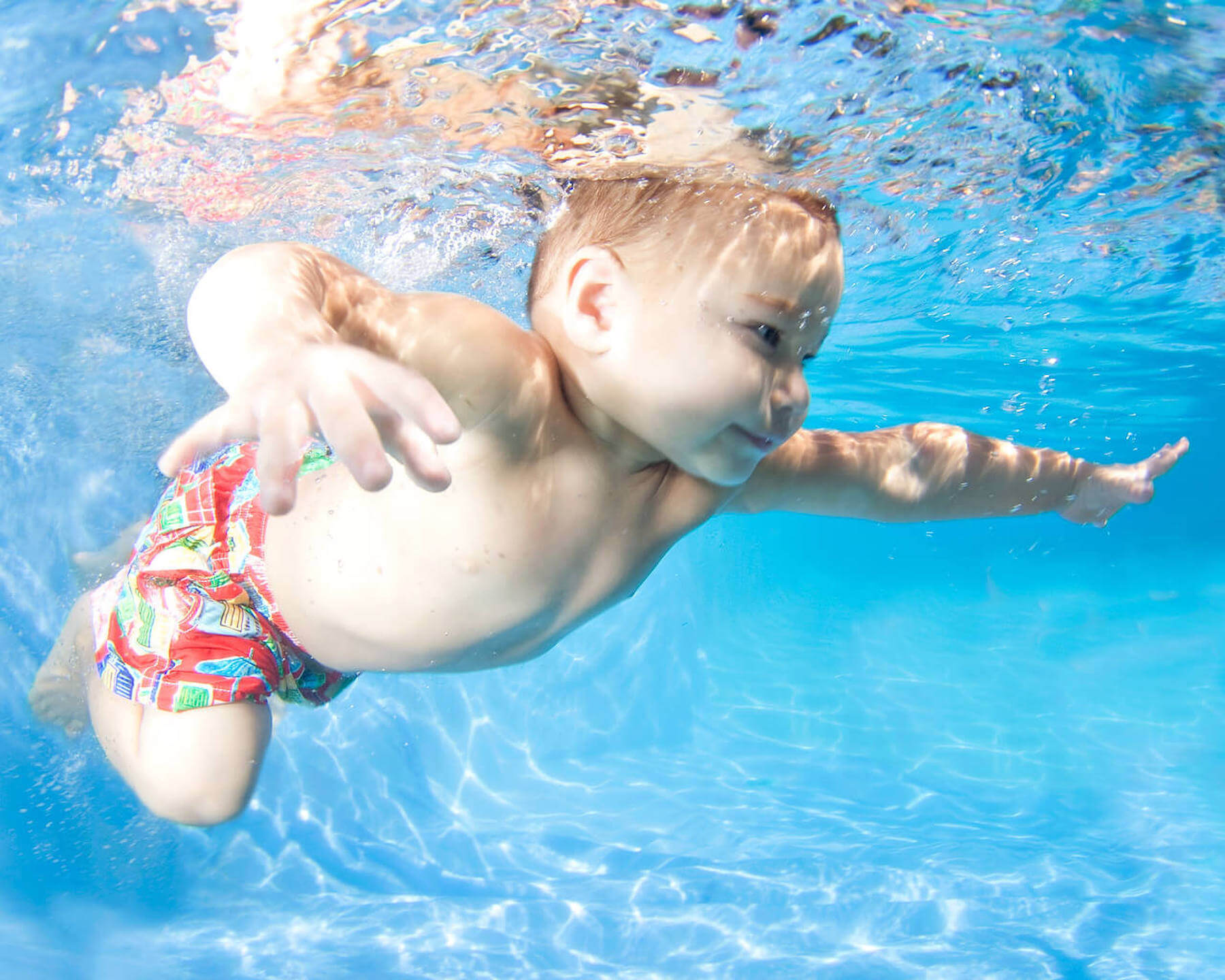
Floaties place your swimmer vertically, which is an incorrect body position in the water. This will cause your swimmer to develop a bicycle kick, which will work against the development of a proper flutter kick that swimmers need for proper swimming. Floaties prevent your swimmer from being horizontal and will cause your swimmer to lose the technique that they are working on in swim class.
Floaties, or arm wings, can also pop, deflate or slip off. Floaties are considered a TOY, they are not US Coast Guard certified.
2) Get off the steps and explore the pool. Step play is great for swimmers, as it allows them to be independent and explore the water unassisted. Step play also exposes your swimmer to the opposing forces of gravity and buoyancy, which will help in core strength and muscle tone development in young swimmers. Make sure to take the time to reinforce holding onto the wall and monkeying around the pool. Swimmers that spend too much time on the steps lose their wall hanging confidence, because they get used to always having something under their feet.
3) HAVE FUN! Pool time should not always be a swimming lesson. Let your swimmer explore and play; playtime can improve confidence and help your swimmer develop additional water skills (i.e. treading water). When you are in the pool, limit your swims to 30 minutes and then take a break. After about 30 minutes, young swimmers become tired and often begin to make mistakes in the pool. These mistakes can lead to bad habits in the water, and even pool drinking.
Related posts:
“Don’t Overthink it!”: Helping an Anxious Swimmer
Parenting a Successful Athlete
Previous post:
The Home School Swimmer and the Swim School Swimmer
Next post: